
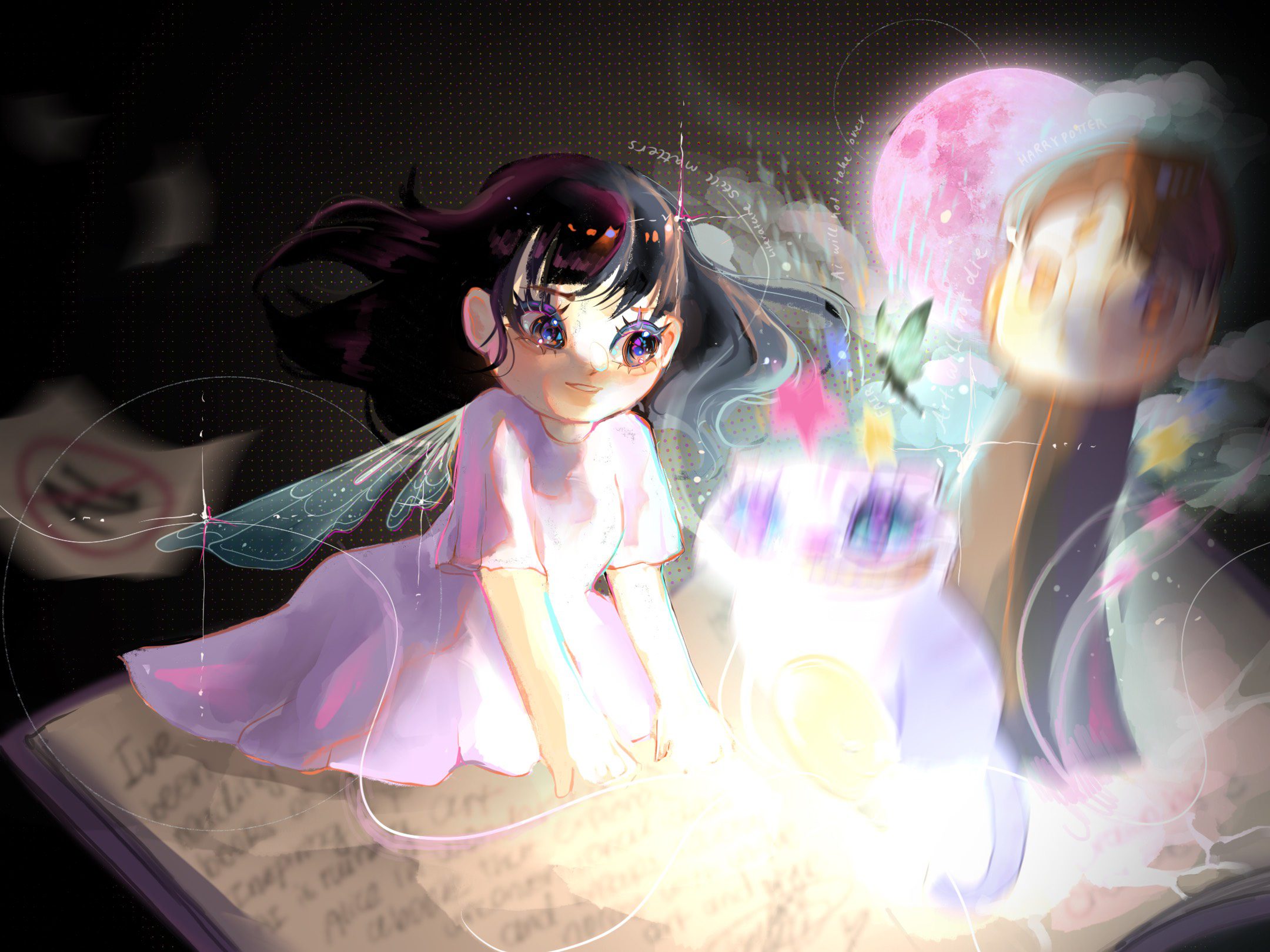
Literature still matters
Mentis Vitae Provida Mundi
The life of the mind, for the life of the world.
The summer of 25 to 26, I found myself reading an absurd amount of literature. My initiative came from a YouTuber by the name of Jack Edwards, after watching a video of him ranking 30 classical literature books, giving a synopsis of each. Somehow, after our brief, one-way conversation, I became completely drawn to reading again.
Back in my primitive age, the only thing I would do was read books about fairies and play pretend that I was a fairy myself. Flash forward a few years, and I had discovered the Harry Potter series, an obsession that I would read over and over again for the next four years. Believe me when I say that I was a true Potterhead – when other children were bragging about their plushie collections, I was bragging about having read the entire series of Harry Potter fifteen times. But after my whole craze for the Wizarding World dissipated, my liking for fiction books, and books in general, went down. I remember my fourth-grade teacher begging me to read more fiction, taking me down the aisles of our middle school library, shopping for books that I might have had the slightest interest in.
Spoiler: my literary scope was successfully rescued.
Significant thanks to RAZ-kids, which used to be the most amazing platform on Earth (before it became so heavily commercialised). Apart from being able to buy robots that did cool animations (I bragged about my collection of them), the site has tons of books, with illustrations, separated into A-Z levels. A being the easiest to read texts, and Z being the hardest to read texts.
I remember reading Alice in Wonderland for the first time in Grade four. I remember immediately falling for the nonsensical part of the world Lewis Carroll so freely crafted. I loved how it didn’t need to make sense, yet I could still be so immersed in the experience. It was the kind of book that I had always liked, fantastical worlds with lighthearted endings.
But most distinctly, I remember reading Call of the Wild for the first time on the platform. The first Classic Novel — and the first real novel not aimed at children — that I had ever read. I went into the book with low expectations, assuming it would be boring. But as each chapter continued with such profound detail and love, it became clear what my new favorite book would be. The number of times that book broke my heart, touched a nerve, or stirred deep emotion made me scared to read it again.
After Call of the Wild, I started to develop a liking for Classics. I read a wider variety of books as well, from books that were made for kids like me to books that I definitely should not be reading at nine years old. Flash forward another few years, and I had read and loved The Curious Incident of the Dog in the Night Time, The Alchemist, Percy Jackson, The Phantom of the Opera, Fahrenheit 451, and 1984. All complete masterpieces.
Flash forward another year, to COVID. I cannot remember many details on how I lost my love for books, but I knew somewhere around that time, I became more academic-centered, more practical, and had stopped needing the experience of reading about another life, somewhere else in time and space. I turned to social media, doomscrolled YouTube shorts, and procrastinated handing in my assignments until twelve every night.
Flash forward, for the last time, to early November of 2025. Over the span of the last few years, I had moved out of China on a student Visa to study in New Zealand. I had new friends, new relationships, new resources that I didn’t have access to before. November was pre-exam season, and perhaps the algorithm misinterpreted my queries on “Macbeth summary video in eight minutes” as a genuine love for literature, but I ended up with Jack Edward’s smiling face cropped next to a tier list on my for you page.
Which prompted me to revisit literature.
Early March of the following year, I came across a speech, addressed by R. F. Kuang, a prestigious author and Professor, to the University of Georgetown graduates of 2025. She uses the motto, “mentis vitae provida mundi”, as a metaphor for education. The life of the mind, for the life of the world.
Which brings me to my last point: reading isn’t just for ‘enjoyment’.
The life of the mind, the seeking of knowledge, the creativity of ideas, the freedom of thought, dedicated to the world, to make it better in some way.
“The life of the mind is a utopia, and history proves its precarity.” It will die if we do not protect it. Kuang claims. If we embrace anti-intellectualism and authoritative control, the life of the mind will die. And with it, the life of the world will also die.
So if I could charge you with anything, it is to read. Read not for your parents, not for your teachers, not for your principal, but for yourself. Read with the purpose of knowledge, of fulfilling the “life” of your mind. Read to broaden your horizons, as your English teacher says.
George Orwell wrote Nineteen Eighty-Four in 1949. Back then, totalitarian regimes, most notably the USSR and Nazi Germany, still existed. And now? More and more examples of anti-intellectual elements in the book had wormed their way into modern society. Sloppy content on the internet is designed to capture your attention span. The use of corporate speech, euphemizing language, is misleading. “Doublethink” and “doublespeak”, oversimplifying language intentionally to promote limiting a person’s ability to think critically. Animal Farm, also by George Orwell, stresses the outcomes of a corrupted government. Today, we see people in power not held accountable for breaking the law.
Ray Bradbury’s Fahrenheit 451 explores the banning of books through violent destruction, having ‘firemen’ burning them. Media censorship is far from uncommon. The Trump administration tried to and nearly succeeded in shutting down a satirical news broadcast that had different political views. The merger of smaller media outputs into bigger companies actively mirrors what happened in 1930’s Germany. In the book, Bradbury stresses how society drowns in shallow entertainment and anti-intellectualism after book-banning, something we are starting to see today. From the degrading quality and diminishing variety of modern novels to the use of AI in practically every situation, it feels like we are being actively encouraged to not think.
Aldous Huxley’s Brave New World takes a different approach to authoritarian control. Unlike Orwell, Huxley justifies that control comes through pleasure, which is represented by a drug. The drug stimulates the addict, leaving them in a mindless state of bliss, much like digital entertainment, we are essentially addicted to needing our brains to be stimulated constantly by this endless rush of dopamine. When faced with a choice, Huxley warns that we would willingly bend to oppression for convenience and standard of living, giving up all qualities that make us human.
For us, the young, new generation, yet to step under the crushing anvil that is reality, now is the time, more than ever, to act. To “trade the life of the mind for the life of the world.”
“It’s time to think more about what happens next. What will you do when you turn the last page?”
Writer – Cynthia Zheng
Editor – Angela Wei
Artist – Charlotte Zhao
–May 2026–
Leave a Reply